War is usually remembered through battles; the advance and retreat of armies, victories and defeats, feats of heroism. For a young man this is what makes war interesting and why some so readily believe that in the hell of battle there is also glory to be had.
If there’s any truth to that it can only be understood by a soldier. A soldier, while he is alive, becomes accustomed to the death, the killing, the brutality. Like any adaptable human being, he adapts to hell. For a civilian it is not as straightforward. On one hand, life continues. One does not encounter the enemy on a daily basis. But for all that, her life is completely upside down. The civilian lives in a schizophrenic world of paranoia, uncertainty, and, often, the same level of brutality.
For civilians, war can mean watching the structure of ordinary life disappear almost overnight. A job, a school, a neighborhood, a marriage, a familiar road home—things that seemed permanent suddenly become precarious. Food disappears. Sons and husbands are conscripted. Neighbors become informers. Bombs fall on ordinary streets. Families flee. Laws change. People vanish. The civilian is caught inside forces he did not choose and can barely influence.
These books look at the Second World War from inside that storm. They move between China and Japan, Germany and Italy, the Soviet Union and the devastated countryside of Eastern Europe. The journey ends with The Kindly Ones, where the perspective finally reverses. After spending six books among people attempting to survive war, we enter the mind of someone participating in its machinery. The final question therefore becomes not only what human beings can endure, but what human beings can become.
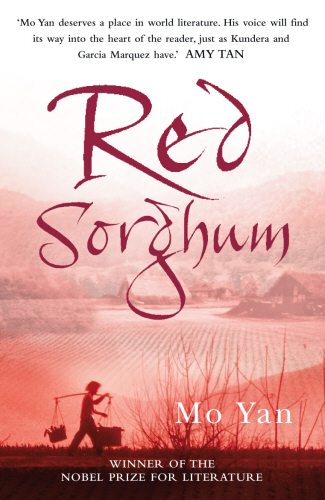
01 · China · ShandongRed Sorghum
Mo Yan
In the rural landscape of northeastern China, family legend, love, violence and memory become inseparable from the Japanese invasion. Mo Yan follows several generations through a world of sorghum fields, bandits, guerrillas and villagers in which resistance can be courageous, savage and morally complicated.
Beginning here means encountering imperial Japan first from the outside: through the lives of people whose homes have become a battlefield.
Take a question with youWhen survival becomes violent, is there still a distinction between heroism and brutality?
02 · Japan · ShōdoshimaTwenty-Four Eyes
Sakae Tsuboi
In 1928, a young schoolteacher arrives at a small village school on an island in Japan's Inland Sea and takes charge of twelve pupils. Over the following years she watches them grow while poverty, nationalism and eventually war gradually narrow the possibilities of their lives.
After Red Sorghum, the change of perspective is striking. The country that appeared as an invading power is now seen from within, through children, parents and a teacher who themselves possess little control over the forces consuming their society.
Take a question with youCould we ever move past an instinct, during wartime, to label an entire group or nation “the enemy”?
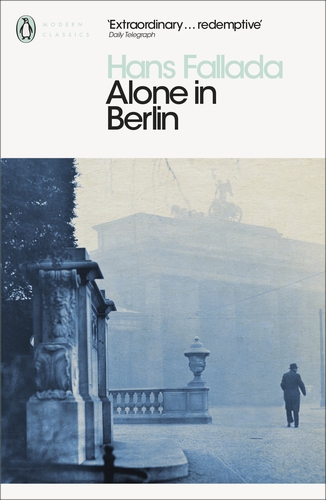
03 · Germany · BerlinAlone in Berlin
Hans Fallada
After their son is killed in the war, Otto and Anna Quangel begin leaving anonymous postcards attacking Hitler's regime around Berlin. Their small act of resistance places them against an enormous apparatus of surveillance, fear and denunciation.
Around them is not simply Nazi Germany, but apartment buildings, workplaces, marriages, petty criminals, frightened neighbors and people making daily calculations about compromise, courage and survival.
Take a question with youWhen resistance seems incapable of changing the outcome, does the act of resisting still matter?
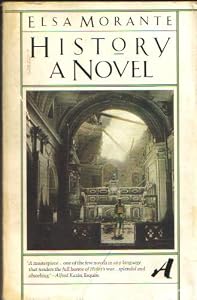
04 · Rome · ItalyHistory (La Storia)
Elsa Morante
Ida Ramundo is a widowed schoolteacher trying to protect her children as Fascism, occupation, bombing, hunger and displacement transform Rome around them. Great historical events continually intrude upon lives that possess almost no power to affect them.
Morante tells history from beneath: through mothers and children, refugees and the poor, and people whose suffering rarely determines how wars are subsequently remembered.
Take a question with youHow do we view the significance of people’s lives when everyone is just another victim of war?
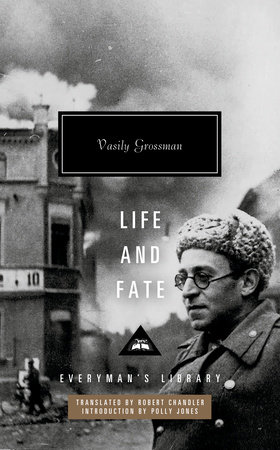
05 · Stalingrad · Russia · Ukraine · GermanyLife and Fate
Vasily Grossman
Against the enormous backdrop of the Battle of Stalingrad, Grossman follows a network of families, soldiers, scientists, prisoners and officials scattered across the Soviet Union and the territories consumed by war.
The novel moves between kitchens and laboratories, trenches and prison cells, concentration camps and bureaucratic offices. The war against Nazi Germany becomes inseparable from Stalinism, antisemitism, ideological conformity and the compromises people make in order to remain alive.
Take a question with youWhen enormous systems reduce people to categories, what allows one human being to continue seeing another as an individual?
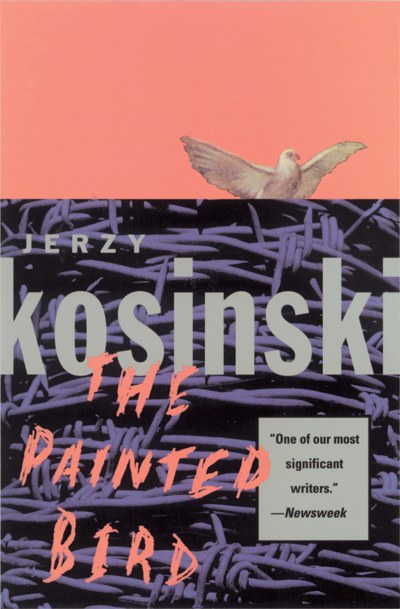
06 · Poland · Rural Eastern EuropeThe Painted Bird
Jerzy Kosiński
A young boy wanders alone through an unnamed Eastern European countryside during the war, passing from village to village and from one precarious refuge to another.
Here the institutions that normally protect a child have almost vanished. War exists less as armies and battles than as a condition in which fear, superstition, prejudice and cruelty have been released from ordinary restraints.
Take a question with youHow much of civilization depends simply upon people believing that its rules will still exist tomorrow?
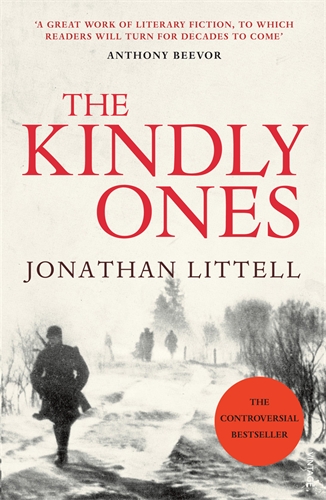
07 · Ukraine · Russia · Poland · Germany · FranceThe Kindly Ones
Jonathan Littell
Maximilien Aue is an educated German and SS officer who moves through some of the central killing zones and institutions of Nazi Europe. Through him, the reader encounters mass shootings in the occupied Soviet territories, the bureaucracies of extermination, Stalingrad and finally the collapse of the Reich.
After six books concerned largely with people caught inside war, the perspective crosses a final boundary. We are now inside the machinery itself, among officers, administrators and functionaries whose decisions transform policy into individual deaths.
The disturbing element is not simply that these people are monsters. Many remain recognizably human: ambitious, frightened, vain, intelligent, obedient, self-deceiving, pragmatic. Atrocity does not always require someone who experiences himself as evil.
Take a question with youWhat allows an ordinary human being to cross the line from accommodation to complicity—and eventually participation?