An island is defined by separation from "the real world". The boundaries formed by the surrounding water make geography highly visible rather than theoretical. Weather, distance, transportation all make island life seem, in a sense, self-contained. For some this boundary is protection, for others claustrophobia. Either way, what lies beyond the horizon feels far away.
Paradoxically, islands are also defined by an exhilarating notion of departure. Journeys from an island are deliberate and consequential. The sea that separates it from the world is also the road that connects it to everywhere else.
These six books move between those possibilities: islands as homes, crossroads, refuges, prisons and starting points. Each asks, in its own way, what changes when the world has an edge that you can see.
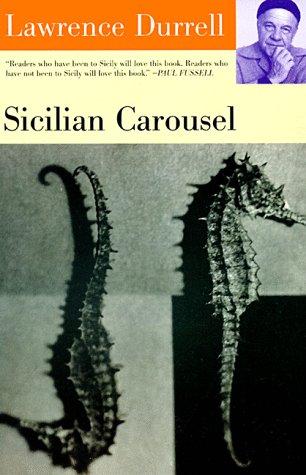
01 · SicilySicilian Carousel
Lawrence Durrell
Lawrence Durrell arrives in Sicily as part of an organized bus tour, an arrangement that sounds almost deliberately unromantic. Yet the carousel of towns, ruins, landscapes and fellow travellers gradually becomes a way into an island whose history seems to have accumulated in layers.
Greek temples, Norman churches, Baroque cities and modern streets occupy the same ground. Sicily has repeatedly been conquered, governed and passed through, but Durrell is interested in what survives beneath those successive arrivals.
The result is less a comprehensive portrait than an affectionate circuit around an island that constantly reminds the traveller how many worlds have reached its shores.
Take a question with youWhat allows a place that was long shaped by outsiders to retain a character of its own?
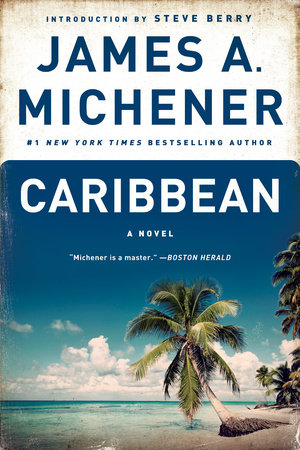
02 · CaribbeanCaribbean
James A. Michener
Rather than treating the Caribbean as a single destination, Michener uses the sweep of historical fiction to move among its islands and across centuries.
Indigenous societies, European conquest, slavery, plantations, piracy, colonial rivalry and independence all pass through the region. The sea separates the islands, but it also binds them into a shared history of movement: people, armies, commodities and ideas are constantly arriving and departing.
The Caribbean emerges as the opposite of an isolated backwater. Its islands sit at the centre of enormous historical currents, small pieces of land repeatedly drawn into struggles extending far beyond their shores.
Take a question with youWhen does isolation protect a place, and when does geography make it impossible to remain apart from the world?

03 · Sri LankaReef
Romesh Gunesekera
Triton is a young boy when he enters the household of Mister Salgado, a marine biologist fascinated by the coral reef surrounding Sri Lanka. He learns to cook, care for the house and understand the small rituals of domestic life while the country beyond it grows increasingly unstable.
The reef gives the novel its quiet centre. It is beautiful, intricate and vulnerable, a living boundary between land and ocean that Salgado fears is being damaged beyond repair.
Around it, another kind of erosion is taking place. Political tensions enter lives that once seemed sheltered from them, and an island that can appear complete unto itself proves no more immune to fracture than the ecosystem surrounding it.
Take a question with youIf truly "no man is an island", can a private world ever remain separate from the changes taking place around it?
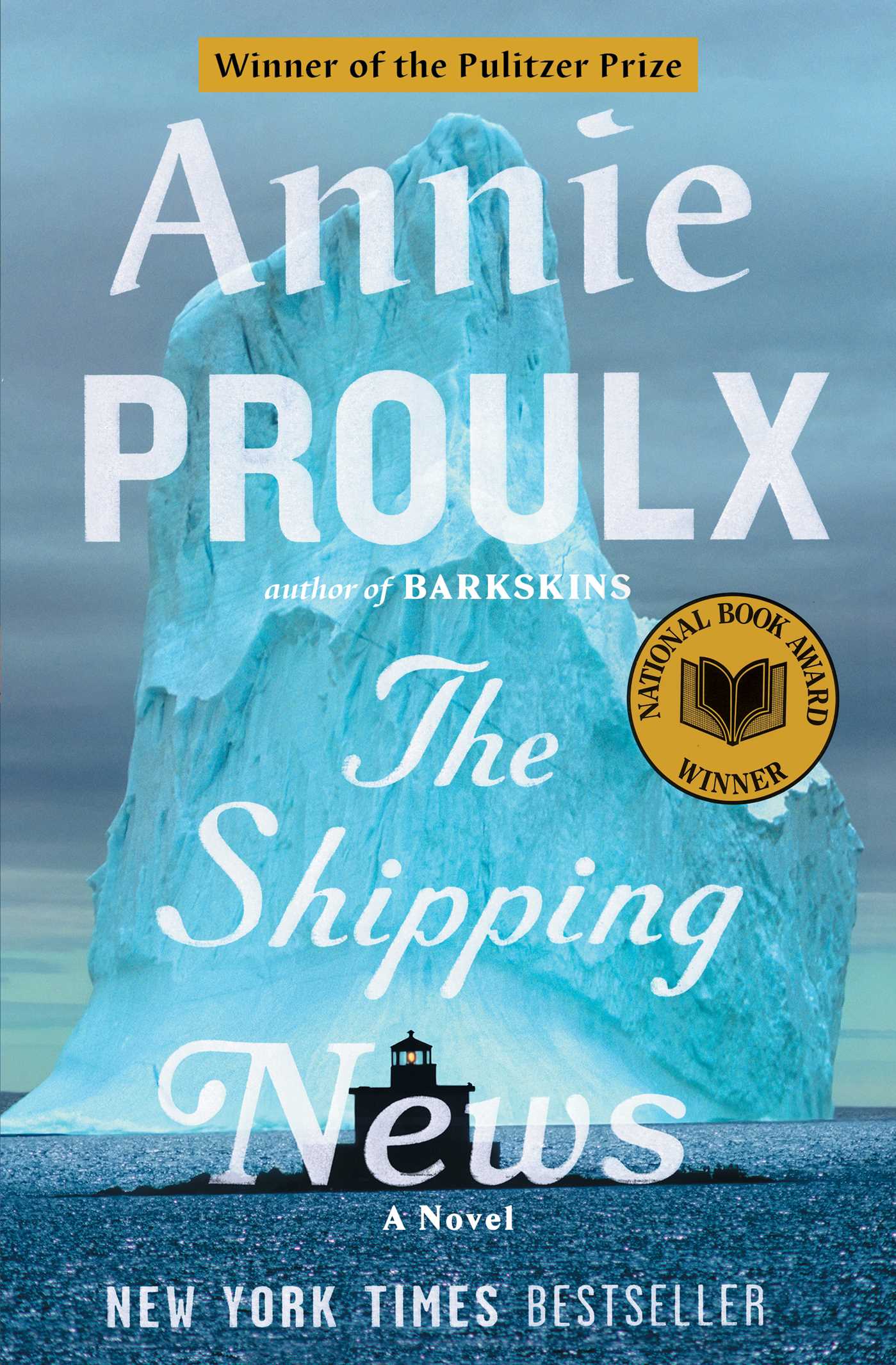
04 · NewfoundlandThe Shipping News
Annie Proulx
After a series of losses, Quoyle leaves the United States with his daughters and returns to his family's ancestral home on the Newfoundland coast.
He takes a job at a local newspaper, where shipping movements, wrecks, car accidents and community gossip become the substance of his working life. Gradually, the landscape and the people around him begin to provide something his previous life did not: a sense of belonging.
Newfoundland is harsh, exposed and remote, but Proulx never reduces remoteness to deprivation. Distance from the wider world creates its own forms of intimacy, memory and dependence. An island can restrict movement, but it can also give a person somewhere definite to stand.
Take a question with youIs belonging created by the place we come from, or by the life we learn to build there?

05 · France · French GuianaPapillon
Henri Charrière
Henri Charrière begins far from the tropics, with a conviction in Paris and a sentence that sends him into the French penal system of Guiana.
From there, the geography of imprisonment becomes increasingly extreme. Penal settlements, jungle, sea and eventually Devil’s Island create a world in which distance itself becomes part of the punishment. Escape is not simply a matter of getting beyond a wall. It means crossing water, surviving exposure and somehow finding a route back into the wider world.
Charrière’s account is driven by that obsession with departure. Whether every episode happened exactly as he tells it is less important to the experience of the book than the force with which he makes confinement physical. The island is not a refuge from the world but a deliberate severing from it and its horizon has only one association: freedom.
Take a question with youWhen a place is designed to cut you off from the world, does the size of the prison matter?

06 · TarawaThe Sex Lives of Cannibals
J. Maarten Troost
When J. Maarten Troost follows his girlfriend to Tarawa, a remote atoll in Kiribati, he arrives with the usual fantasy of island life: palm trees, empty beaches and an escape from the complications of the wider world.
What he finds instead is heat, unreliable utilities, scarce supplies, bureaucratic absurdity and the daily improvisations required to live somewhere profoundly removed from the conveniences he has taken for granted. Troost responds with curiosity, self-mockery and a growing affection for a place that refuses to behave like paradise.
The pleasure of the book comes from that collision. Tarawa is beautiful, difficult, funny and occasionally bewildering, and the farther Troost gets from the tropical fantasy, the more vivid the island becomes.
Take a question with youWhat happens when the paradise we imagine turns out to be much stranger—and more interesting—than the one we expected?